When purchasing commercial beverage refrigeration equipment, buyers often encounter two cooling methods: air-cooled refrigeration and direct cooling.
Both technologies can be used in commercial refrigeration equipment, but their cooling mechanisms, temperature distribution, maintenance requirements, and suitable applications may differ.
Understanding these differences can help retailers, distributors, and restaurant operators make better purchasing decisions.
1. What Is an Air-Cooled Beverage Refrigerator?
An air-cooled beverage refrigerator, also commonly called a fan-assisted beverage refrigerator, uses a refrigeration system and mechanical air circulation to distribute cooled air throughout the cabinet.
Fans help move chilled air between the cooling system and the beverage display area.
This design can be useful in commercial refrigerators containing multiple shelves or doors, where air distribution matters.
However, actual temperature uniformity depends on the complete refrigeration design, including airflow channels, fan placement, loading conditions, and cabinet insulation.
2. What Is a Direct-Cooled Beverage Refrigerator?
A direct-cooled refrigerator transfers cooling through refrigerated cabinet surfaces or evaporator arrangements without relying on the same forced-air circulation approach.
Temperature distribution may depend more heavily on natural convection and the position of the evaporator.
Some direct-cooling designs have simpler air circulation systems, but their temperature performance and maintenance characteristics vary by model.
A direct-cooled refrigerator should not automatically be considered unsuitable for commercial use.
The correct choice depends on the required temperature, cabinet structure, intended loading, and operating conditions.
3. Air-Cooled vs Direct-Cooled: Key Differences
| Comparison | Air-Cooled | Direct-Cooled |
| Cooling distribution | Fan-assisted air circulation | Primarily natural convection or surface cooling |
| Temperature uniformity | Can support distribution across multiple shelves | May exhibit greater temperature differences depending on design |
| Air movement | Active airflow | Typically less forced airflow |
| Frost management | Depends on evaporator and defrost design | Depends on evaporator and defrost design |
| Maintenance | May involve fans and associated components | May use a simpler air-circulation arrangement |
| Energy consumption | Model-dependent | Model-dependent |
| Suitability for beverage retail | Often useful for multi-shelf display | Must be evaluated for the specific cabinet |
There is no universal rule that one cooling method always consumes less electricity or requires less maintenance.
4. Which Cooling Method Is Better for Frequent Door Opening?
Convenience stores and supermarkets often experience frequent door opening during business hours.
Each opening allows warmer ambient air to enter the refrigerated cabinet.
An air-cooled system can help circulate cooled air after the door closes. However, the actual recovery time depends on refrigeration capacity, door design, ambient conditions, and product load.
Buyers should request temperature-recovery or performance data where frequent door opening is a major operating requirement.
A fan alone does not guarantee faster product cooling.
5. Which Is Better for Multi-Door Beverage Displays?
Multi-door beverage refrigerators may contain numerous shelves and products across a wide cabinet.
Air distribution is an important design consideration because poorly arranged products can obstruct circulation.
Fan-assisted refrigeration is commonly considered for this type of application, although the final performance must be verified at model level.
For buyers, the most useful questions are:
- Does the cabinet maintain the required temperature throughout its display area?
- What happens when products are loaded at ambient temperature?
- How does the refrigerator perform during repeated door opening?
- Are there loading limits or required airflow clearances?
- Under which ambient conditions was the unit tested?
These questions are more useful than choosing equipment solely from its cooling-method label.
6. Does Air-Cooled Refrigeration Prevent Frost?
Not necessarily.
Air-cooled refrigeration should not automatically be described as frost-free.
Frost formation and removal depend on evaporator temperature, humidity, door-opening frequency, and the defrost system.
Different refrigeration designs can use different automatic or manual defrost arrangements.
Buyers should check the actual defrost specifications rather than assuming the system requires no maintenance.
7. How Do Energy Costs Compare?
Cooling technology alone does not determine electricity consumption.
Actual operating cost depends on factors including:
- Cabinet volume
- Refrigeration system efficiency
- Insulation and door sealing
- Temperature settings
- Ambient temperature and humidity
- Door-opening frequency
- Product loading
- Fan and defrost operation
A meaningful energy comparison requires models with similar capacity, temperature requirements, and declared testing conditions.
Buyers should ask manufacturers for daily electricity-consumption figures and the conditions under which those values were measured.
8. How to Choose the Right Cooling System
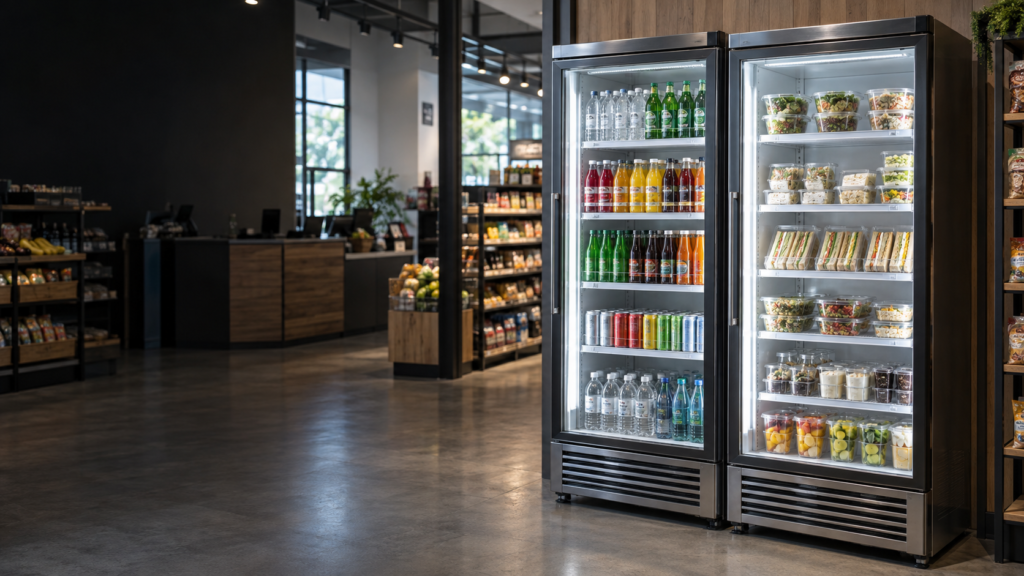
For customer-facing beverage displays, prioritize temperature control, appropriate capacity, visibility, reliability, and operating suitability.
Air-cooled refrigeration is worth considering for multi-shelf glass-door beverage coolers, particularly where good air distribution is an important requirement.
Direct cooling may be suitable for certain cabinet designs where its verified performance meets the customer’s needs.
Before ordering, confirm:
- Required storage temperature
- Available installation space
- Ambient operating conditions
- Expected door-opening frequency
- Daily product loading
- Declared power consumption
- Defrost and maintenance requirements
- Electrical compatibility
Frequently Asked Questions
Is air-cooled refrigeration always better than direct cooling?
No. Both systems should be evaluated based on model-specific performance, energy use, and operating requirements.
Do air-cooled beverage refrigerators use more electricity?
Not necessarily. Cabinet size, design efficiency, operating temperature, and testing conditions all affect consumption.
Is an air-cooled refrigerator suitable for tropical climates?
Only if the model is rated for the intended ambient conditions. Buyers should confirm the applicable climate rating and operating limits.
Can I compare two refrigerators by their rated power?
Rated power alone is not sufficient. Daily energy consumption and comparable test conditions are more useful when evaluating running costs.
Air-Cooled Beverage Coolers From Yichuhui
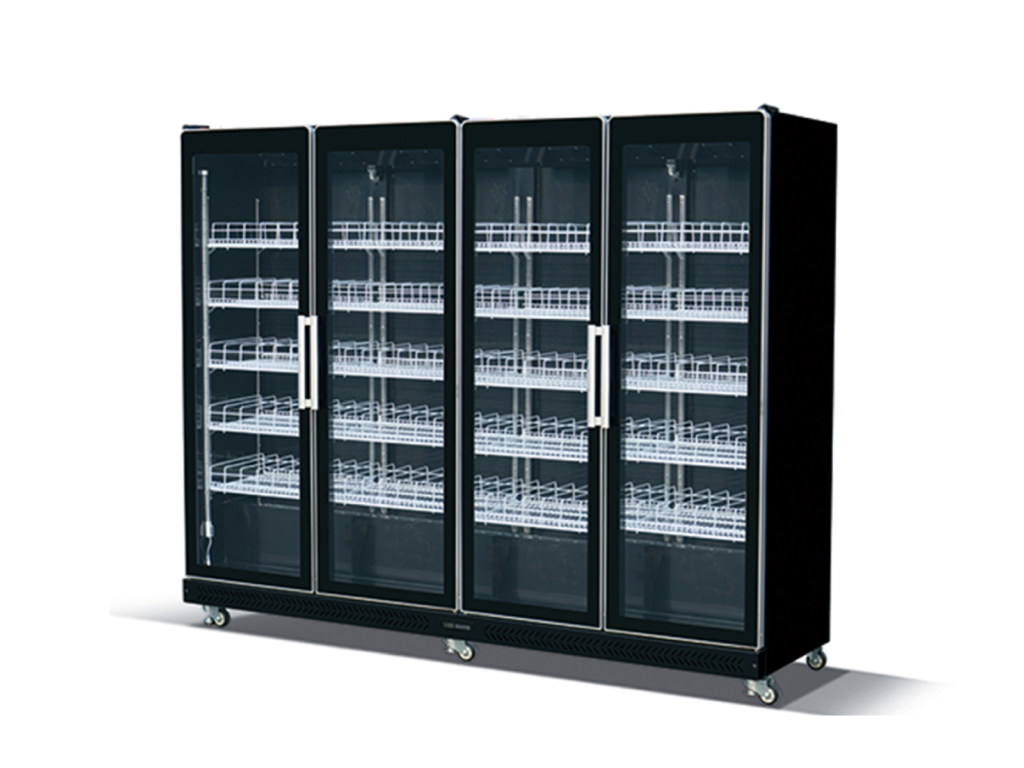
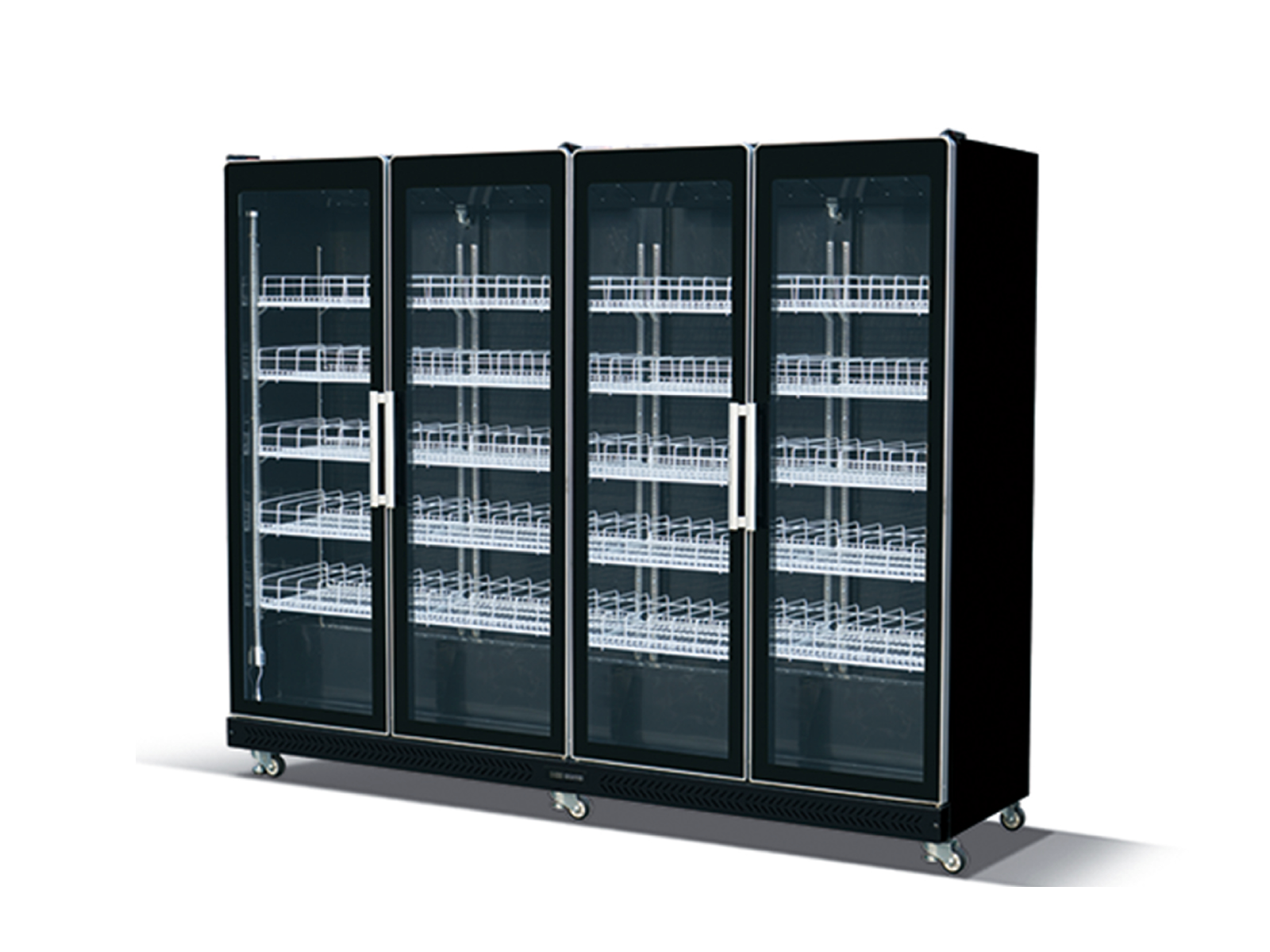
Yichuhui manufactures a range of upright air-cooled beverage coolers with glass-door display configurations for retail and hospitality applications.
Selected models use R290 refrigerant and offer a specified temperature range of 2–8°C.
Explore our Air-Cooled Beverage Cooler Range or CONTACT US to discuss your refrigeration requirements, electrical specifications, destination market, and purchasing quantities.