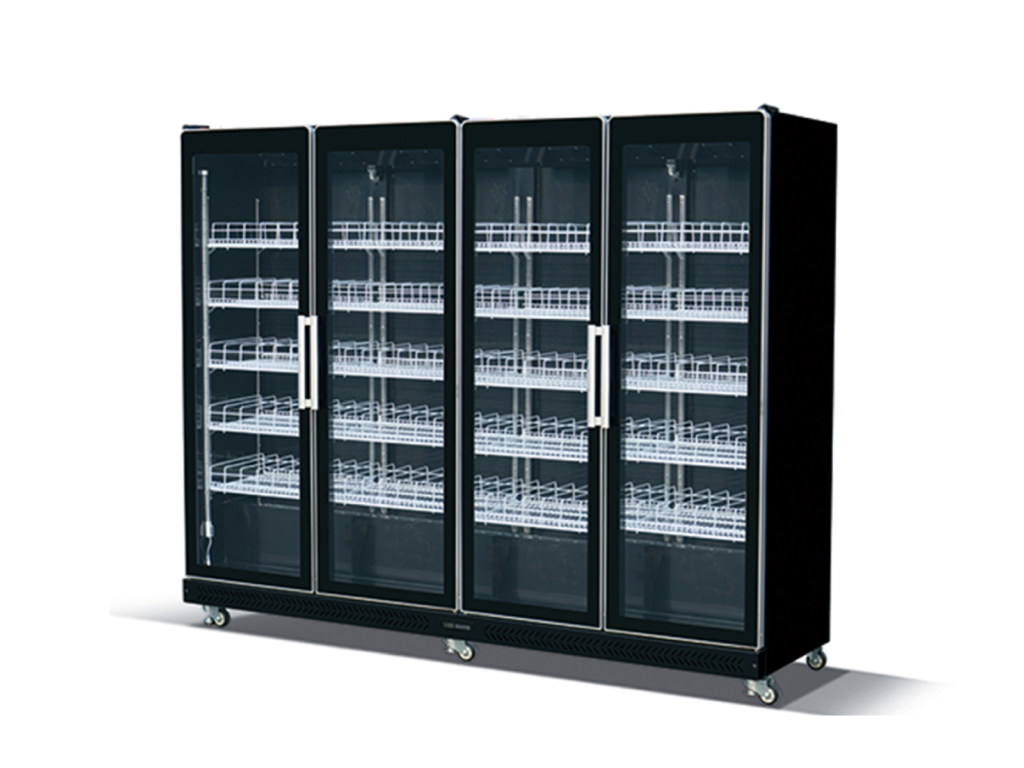
A beverage cooler is a refrigeration appliance designed to keep bottled and canned drinks at controlled chilled temperatures. It is commonly used to store and display water, soft drinks, juice, energy drinks, beer, and other packaged beverages.
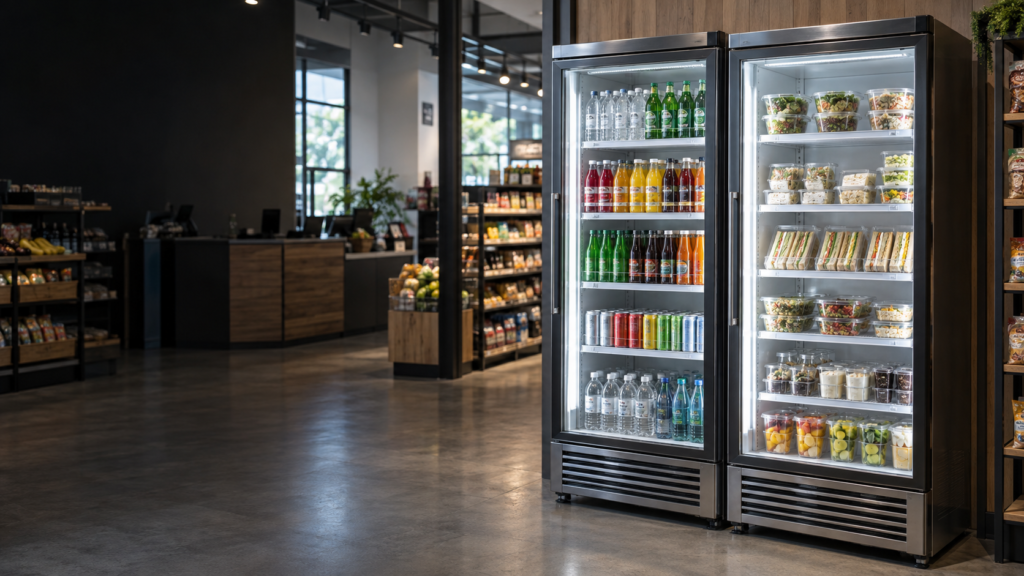
Unlike a freezer, a beverage cooler is intended for refrigeration rather than freezing. Many commercial models feature transparent glass doors, internal lighting, adjustable shelves, and temperature controls that make beverages easy to see, organize, and access.
Beverage coolers are widely used in convenience stores, supermarkets, restaurants, hotels, offices, bars, and other commercial environments.
This guide explains what a beverage cooler does, how it works, its ideal operating temperature, typical applications, costs, and whether it can be used for food, milk, flowers, or general refrigeration.
1. What Is a Beverage Cooler?
A beverage cooler, sometimes called a beverage refrigerator or beverage display fridge, is a cooling cabinet designed primarily for storing chilled drinks.
Its two main functions are:
- Temperature control: Keeping beverages within the equipment’s specified refrigerated temperature range.
- Storage and display: Organizing drinks and making them accessible to employees or customers.
Commercial beverage coolers may include glass doors, illuminated interiors, multiple shelves, digital temperature controllers, and fan-assisted cooling systems.
Models differ significantly in size and intended use. A compact beverage refrigerator may serve a small office, while a multi-door commercial cooler can display a wide range of products in a supermarket.
For businesses purchasing equipment in larger quantities, beverage coolers are also available in different exterior finishes and configurations.
2. How Does a Beverage Cooler Work?
Most compressor-based beverage coolers use a vapor-compression refrigeration system to remove heat from the cabinet and release it into the surrounding environment.
The main components include a compressor, condenser, expansion device, evaporator, and temperature control system.
The refrigeration cycle generally follows four stages.
Step 1: The Compressor Circulates Refrigerant
The compressor draws in low-pressure refrigerant vapor and compresses it into a high-pressure, high-temperature gas.
This creates the pressure difference needed for the refrigeration cycle.
Step 2: The Condenser Releases Heat
The hot refrigerant passes through the condenser, where heat is transferred to the surrounding air.
As heat is removed, the refrigerant condenses into a high-pressure liquid.
Step 3: The Expansion Device Reduces Pressure
The refrigerant passes through an expansion device, reducing its pressure and temperature before entering the evaporator.
Step 4: The Evaporator Absorbs Heat
Inside the refrigeration system, the evaporator absorbs heat from the refrigerated space.
The refrigerant evaporates as it takes in heat and then returns to the compressor to repeat the cycle.
In an air-cooled beverage refrigerator, fans assist with circulating chilled air around the display compartment.
A temperature controller monitors cabinet temperature and operates the refrigeration system according to the selected settings.
The result is a continuous process that removes heat and helps maintain a suitable beverage storage environment.
For a more detailed comparison of refrigeration methods, read our Air-Cooled vs Direct-Cooled Beverage Refrigerators.
3. What Is the Ideal Temperature for a Beverage Cooler?
The ideal temperature depends on the beverage type, whether the drinks are intended for immediate consumption, and the manufacturer’s storage requirements.
For many ordinary packaged drinks, temperatures of approximately 2–8°C (36–46°F) can provide a practical chilled serving range.
However, this range should not be treated as a universal food-safety recommendation.
| Beverage Type | Temperature Consideration |
|---|---|
| Bottled water | Chilled serving temperature depends on preference |
| Soft drinks | Often served chilled; follow product instructions |
| Energy and sports drinks | Follow packaging and storage requirements |
| Juice and refrigerated drinks | Check manufacturer requirements, particularly for perishable products |
| Milk and dairy beverages | Must meet applicable refrigerated food-storage requirements |
| Wine | May require a specialized storage temperature and humidity environment |
Selected Yichuhui commercial air-cooled beverage coolers have a rated temperature range of 2–8°C.
This describes the equipment’s specified operating range, not a guarantee that every product inside will remain at the same temperature under all conditions.
For perishable foods and dairy products, the U.S. FDA recommends a refrigerator temperature of 4°C (40°F) or below.
If a beverage cooler cannot reliably maintain the required temperature throughout the loaded cabinet, it should not be used for those products.
4. What Are Beverage Coolers Used For?
Beverage coolers serve both commercial and everyday applications.
Convenience Stores and Mini Markets
Glass-door beverage coolers allow customers to identify chilled bottled drinks before opening the cabinet.
Typical products include bottled water, soft drinks, energy drinks, and ready-to-drink beverages.
Store owners should consider the number of product varieties, expected sales volume, and frequency of restocking.
Read our Convenience Store Beverage Cooler Guide for application-specific selection advice.
Supermarkets and Grocery Stores
Larger retail locations may need two-door, three-door, or four-door refrigeration cabinets to display a greater beverage assortment.
The appropriate size depends on available space, product turnover, and the required merchandising layout.
Restaurants, Bars, and Hotels
Restaurants and hospitality businesses use beverage coolers to keep drinks ready for service or customer selection.
Cabinet appearance, door type, and installation dimensions can be especially important in customer-facing environments.
Offices and Commercial Lounges
Beverage coolers may be used in offices, staff rooms, waiting areas, and hospitality lounges.
Smaller businesses may prioritize compact dimensions and convenient access over maximum display capacity.
Fitness Centers and Sports Facilities
Gyms and sports facilities commonly use chilled drink displays for bottled water and sports beverages.
Expected demand during peak periods and customer access should influence equipment selection.
5. Beverage Cooler vs Refrigerator vs Freezer: What Is the Difference?
Although beverage coolers, refrigerators, and freezers all use refrigeration technology, they are intended for different storage requirements.
| Feature | Beverage Cooler | General Refrigerator | Freezer |
|---|---|---|---|
| Primary purpose | Chilling and displaying drinks | Refrigerated food storage | Frozen storage |
| Typical contents | Bottled and canned beverages | Food, dairy, produce and beverages | Frozen foods and ice cream |
| Temperature | Model-dependent chilled range | Typically maintained at or below 4°C for food safety | Typically around -18°C |
| Display design | Frequently glass-door | Solid or glass-door | Solid or display-glass options |
| Shelf arrangement | Often optimized for bottles and cans | Designed for varied food containers | Designed for frozen products |
The main difference is not simply whether the unit can become cold.
A beverage cooler is often optimized for product presentation and convenient drink access, while a general refrigerator may be better equipped for varied perishable food storage.
A freezer is designed to maintain frozen products at substantially lower temperatures.
A standard beverage cooler is not a substitute for a freezer.
Buyers requiring frozen product display should select suitable Commercial Freezers or dedicated display-freezer equipment.
6. Can You Use a Beverage Cooler as a Refrigerator?
Yes, in certain situations, but only when the equipment meets the storage requirements of the intended contents.
For example, a beverage cooler may provide appropriate chilled storage for packaged drinks that do not require specialized handling.
However, not every beverage cooler is suitable for perishable food.
Important factors include:
- Actual temperature stability throughout the cabinet
- Minimum and maximum operating temperatures
- Door-opening frequency
- Airflow and loading restrictions
- Food-storage requirements
- Intended use and equipment documentation
For regular storage of perishable groceries, a purpose-designed refrigerator is generally the more appropriate choice unless the beverage cooler has been verified for the intended application.
7. Can You Keep Milk in a Beverage Cooler?
Milk and other perishable dairy products require controlled refrigeration.
In the United States, the FDA advises keeping refrigerated perishable foods at 4°C (40°F) or below.
A beverage cooler with a 2–8°C adjustable range should not automatically be considered suitable for milk simply because it can be set below 4°C.
The important question is whether the unit can consistently maintain the required temperature under actual operating conditions.
Before storing milk, verify the product’s storage instructions, local food-safety requirements, and loaded-cabinet temperature performance.
For a commercial dairy display application, request the manufacturer’s relevant temperature and performance documentation.
8. Can You Use a Beverage Cooler for Food?
It depends on the food.
Some shelf-stable packaged products may be chilled for convenience without requiring strict refrigerated storage.
Other foods, including dairy, meat, seafood, cut produce, and prepared meals, may require specific temperature controls and hygienic storage conditions.
A beverage cooler should only be used for these products when its actual performance and design meet the relevant requirements.
Important considerations include food-contact hygiene, temperature control, cross-contamination risks, cleaning access, and local food-safety regulations.
For restaurants and commercial kitchens, a dedicated foodservice refrigerator is usually the more appropriate starting point.
9. Can You Use a Beverage Cooler for Flowers?
A beverage cooler can provide a chilled environment, but it is not automatically suitable for storing fresh flowers.
Cut flowers may require different temperatures and humidity conditions depending on the species.
Specialized floral refrigerators are designed around the storage needs of flowers, including moisture management and airflow characteristics.
A standard beverage cooler may provide unsuitable humidity or airflow, potentially affecting flower quality.
For occasional flower storage, users should verify the requirements of the specific flowers and the actual cabinet conditions.
For professional florists or long-term flower display, purpose-designed floral refrigeration is generally preferable.
10. How Much Does a Beverage Cooler Cost?
Commercial beverage cooler prices vary depending on size, refrigeration system, materials, features, and order requirements.
A single-door display refrigerator normally requires a smaller cabinet and less display space than a comparable multi-door model, but purchase price does not necessarily increase in direct proportion to capacity.
Major pricing factors include:
Cabinet size and number of doors: One-door, two-door, three-door, and four-door designs have different material and refrigeration requirements.
Refrigeration technology: Compressor specifications, airflow design, energy performance, and control systems can affect costs.
Exterior and interior finishes: Standard finishes and specialized appearance options may carry different prices.
Customization: Branding, logo placement, electrical configurations, and other approved OEM options may affect quotations.
Order quantity: Wholesale and project orders may have different commercial terms from individual purchases.
Shipping and destination: Export packaging, freight, import duties, and local delivery can materially change the landed cost.
How Much Is a Wine Fridge?
A wine fridge is a related but distinct product category.
Wine refrigerators may be designed to support particular wine-serving or storage temperatures and, depending on the model, humidity and vibration considerations.
Prices vary widely by capacity, temperature-zone configuration, built-in versus freestanding installation, and specialized storage features.
A standard commercial beverage cooler should not be assumed to provide the conditions required for long-term wine storage.
For international wholesale purchasing, request a quotation based on the actual product specifications rather than relying on a generic retail price range.
11. What Types and Sizes of Beverage Coolers Are Available?
Commercial beverage coolers are available in several cabinet configurations.
Yichuhui offers selected upright air-cooled beverage cooler models with the following dimensions and capacities:
| Model Configuration | Dimensions (W × D × H) | Effective Volume |
|---|---|---|
| 1 Door | 600 × 650 × 2020 mm | 385 L |
| 2 Door | 1200 × 650 × 2020 mm | 832 L |
| 3 Door | 1800 × 650 × 2020 mm | 1,277 L |
| 4 Door | 2400 × 650 × 2020 mm | 1,723 L |
These specifications apply to a selected Yichuhui product series and should not be interpreted as universal beverage cooler dimensions.
The ideal door configuration depends on display requirements, beverage assortment, and available installation space.
For a detailed comparison, read our Commercial Beverage Cooler Sizes: 1 vs 2 vs 3 vs 4 Doors.
12. How to Choose the Right Commercial Beverage Cooler
Choosing a beverage cooler requires more than comparing cabinet capacity.
Before making a purchase, consider the following questions:
- What types of beverages will be stored?
- What temperature must the cabinet maintain?
- How many bottles or cans need to be displayed?
- How frequently will the doors be opened?
- How much installation space is available?
- What is the ambient temperature at the installation site?
- What voltage and frequency are available?
- Is a standard finish sufficient, or is OEM customization required?
- What are the energy-consumption and maintenance requirements?
- What are the order quantity and delivery requirements?
For a complete selection framework, read our How to Choose a Commercial Beverage Cooler.
This buying guide explains how to evaluate temperature, capacity, door configurations, refrigeration technology, energy consumption, and application suitability before purchasing.
13. Where Can You Buy Commercial Beverage Coolers?
Commercial beverage coolers are available through appliance retailers, refrigeration distributors, commercial kitchen equipment suppliers, and manufacturers.
For an individual business purchasing one unit, a local distributor may offer convenient installation and after-sales services.
For importers, wholesalers, refrigeration equipment distributors, and commercial projects, purchasing directly from a manufacturer can provide access to factory quotations, product specifications, and supported customization options.
When evaluating a manufacturer, ask for:
- Product specifications and available configurations
- Temperature range and climate rating
- Power supply and refrigerant details
- Electricity-consumption data
- Packaging dimensions and shipping weight
- Applicable certification documents
- Minimum order quantity and production lead time
- Warranty and spare-parts arrangements
Commercial Beverage Cooler Manufacturer in China — Yichuhui
Yichuhui (Zibo) Refrigeration Equipment Co., Ltd. is a commercial refrigeration equipment manufacturer based in Zibo, Shandong, China.
Our product range includes air-cooled beverage coolers for supermarkets, convenience stores, hospitality businesses, and international B2B buyers.
Selected models feature one to four glass doors, air-cooled refrigeration, R290 refrigerant, and a specified 2–8°C temperature range.
Explore our Commercial Beverage Cooler Product Range to review available configurations.
For wholesale purchasing, OEM requirements, product specifications, and factory quotations, CONTACT US with your required cabinet size, destination market, order quantity, and intended application.